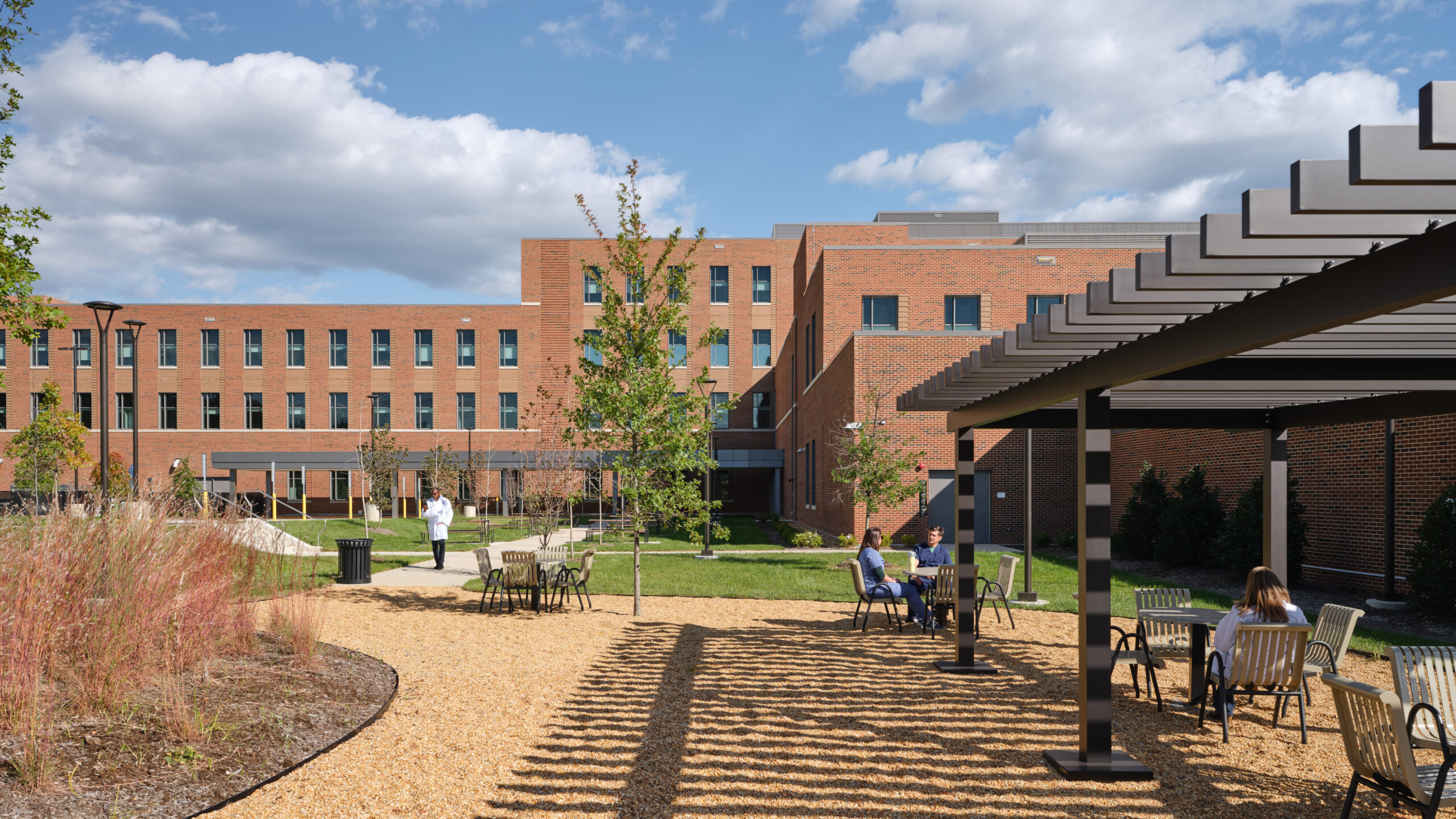
Last fall, I had the opportunity to present alongside a colleague at the Planetree Person-Centered Care Global Forum, an organization dedicated to setting the global standard for person-centered care. Together, we explored the importance of reconnecting with nature through healthcare environments and shared real-world biophilic and healing garden design strategies, including budget-conscious approaches that work at any scale.
For anyone involved in healthcare design, from planners to administrators to designers, these strategies offer a practical and evidence-based path toward spaces that genuinely support healing.
HOW BIOPHILIC DESIGN SHOWS UP IN HEALTHCARE
Biophilic design is the intentional incorporation of nature into the built environment. In healthcare settings, that means natural light, greenery, water features, and organic materials working together to support physical, emotional, and psychological healing. The concept is rooted in a simple truth: humans are wired to connect with nature, and when that connection is present, we feel better.
In practice, this goes well beyond adding a few plants to a waiting room. It’s about shaping how a space feels from the moment someone walks in. That includes orienting rooms to capture natural light and views, using materials that echo the textures and patterns found in nature, and designing spaces that feel rooted in their specific place and community. It also means creating environments that offer both openness and shelter. That balance of prospect and refuge, the feeling of being able to see your surroundings while also feeling protected, is something humans instinctively respond to. When all of these elements work together, they do something powerful: they restore the connection between people and the natural world, which is at the heart of what biophilic design is meant to do.

In our work at Little, we’ve applied these principles across a range of project types. For palliative care, that might mean meditative spaces designed for quiet reflection and comfort. Quiet zones and symbolic plantings can serve patients across many healthcare settings, offering moments of calm and meaning in what are often stressful environments.
In family-centered settings, healing gardens create room for connection and respite. Playful, calming, and inclusive outdoor spaces give patients of all ages and needs a chance to engage with nature on their own terms. And indoors, nature can come through in wood laminate, nature-scene wall coverings, stone-look materials, luminescent sky ceilings, and large windows that frame the outside world.
Mental health and behavioral health settings call for a deeper level of intentionality. Therapy gardens, horticultural therapy programs, and neurodivergent-inclusive design support emotional healing in ways that traditional clinical environments often can’t. Play-focused gardens serve therapeutic goals beyond recreation, and dedicated spaces for youth and adults reflect the distinct emotional and developmental needs of each group.
THE HOSPITAL IN THE PARK CONCEPT
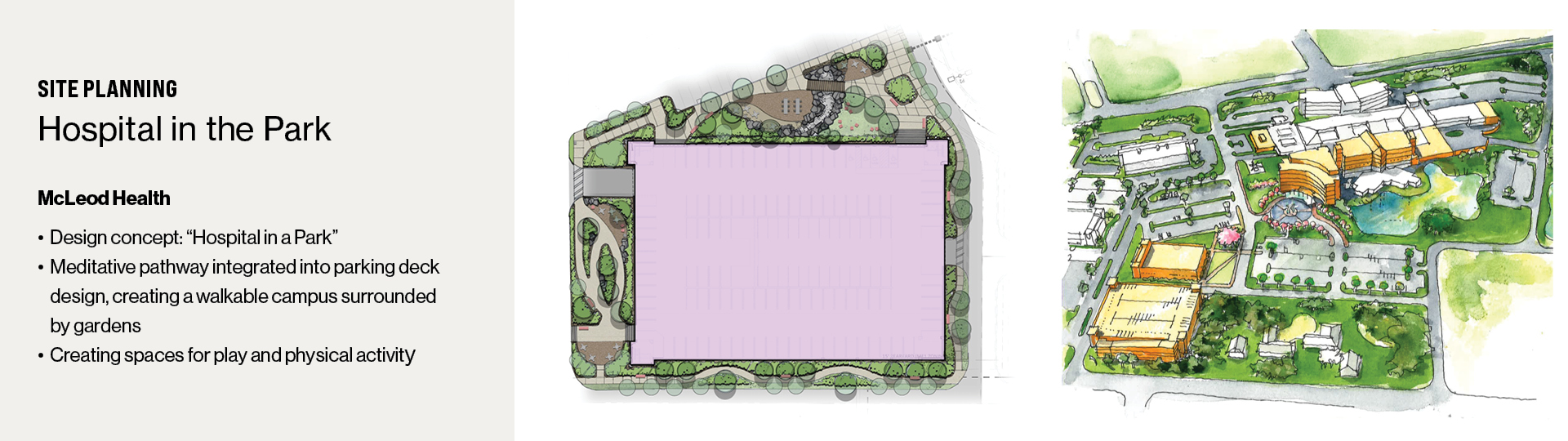
One of the most compelling models we’ve seen in healthcare design is what we call the “hospital in the park” concept. Rather than treating outdoor space as leftover land between buildings and parking, this approach makes the landscape itself part of the care experience. That means walkable, garden-rich campuses where meditative pathways wind through parking decks, edible landscapes invite community engagement, and sensory gardens offer patients, families, and staff a genuine place to breathe and recover. Native plantings and fruit-bearing trees support sustainability while giving the environment a sense of place and permanence.
DESIGNING HEALING LANDSCAPES
Good exterior design starts with smart site planning. That means orienting views and spaces toward sunlight, preserving and enhancing natural ecosystems, and weaving water, sound, and sensory experiences throughout the landscape. Walkable paths with moments of pause for reflection aren’t just pleasant additions. Research from the CDC links walkable environments to improved heart health and reduced stress, and a 1984 landmark study by Roger Ulrich demonstrated that patients with views of nature recovered faster and required less pain medication.
Materials matter, too. Natural stone, permeable pavers, reclaimed wood, and recycled-content surfaces bring texture and warmth to outdoor spaces while supporting sustainability goals. Exposed aggregate with shells or metal, gravel paths, and reused concrete all offer tactile richness that synthetic materials simply don’t. Benches and site furnishings made from recycled materials extend that commitment without sacrificing comfort or durability.

Plant selection is where exterior design gets personal. Native and adaptive plants require less maintenance and support local ecosystems. Aromatic herbs like lavender, rosemary, and thyme do double duty, they’re beautiful and research shows they support memory and reduce anxiety, particularly for older adults and those living with dementia. Colorful perennials and ornamental grasses add movement and seasonal interest, while edible plants like blueberries, mint, and cherry tomatoes create interactive, joyful spaces especially well-suited to pediatric and family settings.
When all of these elements come together thoughtfully, something shifts. The landscape stops being a backdrop and becomes an active part of the healing process, one that supports recovery, fosters community, and reminds us that nature has always been one of our most powerful caregivers.
WHERE INTERIOR DESIGN MEETS THE NATURAL WORLD
Walk into almost any hospital and the environment tells you the same story: clinical, efficient, and sterile. Those qualities are necessary, but they don’t have to define the full experience. Biophilic interior design works within those constraints to create spaces that also feel warm, navigable, and human, without compromising the functional demands of a care environment.
One of the most practical tools we work with is environmental graphics. Nature-based imagery introduced through wall coverings, murals, and printed surfaces brings the outdoors in while remaining cleanable and durable, two non-negotiables in clinical settings. While these graphics do set a mood, they also serve as recognizable visual landmarks that help patients and visitors navigate unfamiliar environments, which matters more than most people realize.
Poor wayfinding creates a ripple effect that touches everyone in a facility. Patients and visitors who can’t find their way become anxious and frustrated. That frustration lands on staff, who field constant interruptions and redirections on top of already demanding workloads. Over time, that added stress contributes to burnout, and burnout leads to turnover. Replacing a single nurse costs a hospital an average of $50,000 in recruitment and training alone. A well-designed, legible environment is an investment that pays for itself.
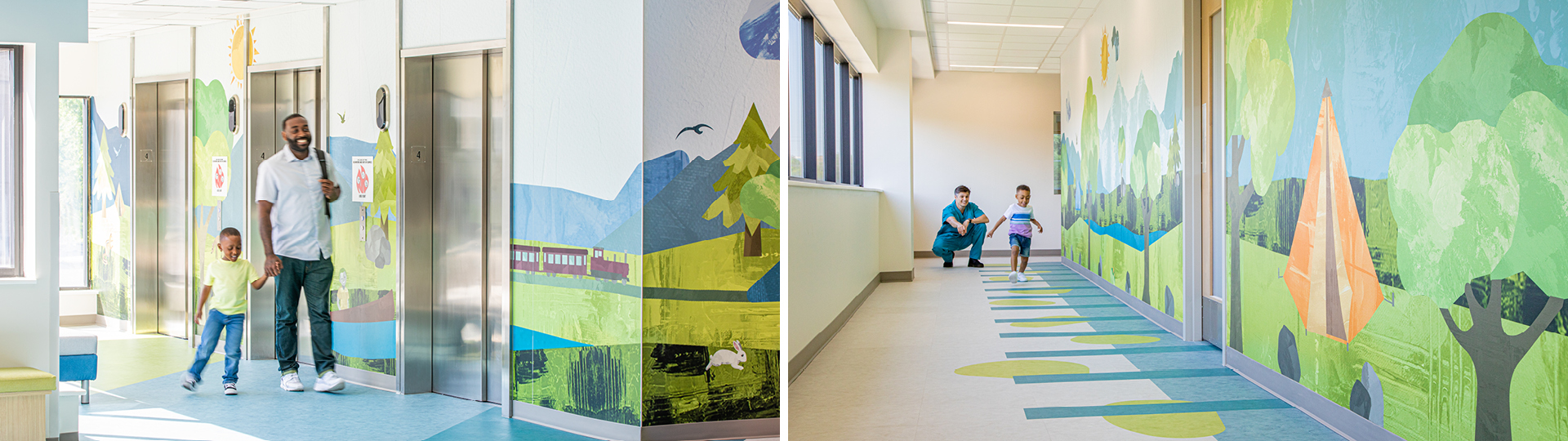
The evidence supporting art and nature indoors is compelling. An Italian study focused on art in the hospital found that 72% of patients said photographs improved their hospital stay. According to the Americans for the Arts Arts + Health & Well-Being fact sheet, patients who could view nature or art from their hospital bed recovered nearly a day faster and required fewer pain medications. These aren’t small margins in a healthcare setting.
Color and pattern play a significant role as well. Nature-based palettes, organic patterns, biomorphic geometry, and seasonal motifs all draw on the same principles as biophilic design, grounding people in something familiar and calming. Fractals, the repeating patterns found throughout the natural world, have been shown to reduce stress responses, and they translate beautifully into textiles, flooring, and wall surfaces.
DESIGNING FOR EVERY SENSE
Good interior design in healthcare doesn’t stop at what you can see. Tactile materials such as simulated wood, natural stone textures, and soft textiles reduce the sterile feel of clinical environments and create a sense of comfort that purely functional surfaces can’t. For patients living with dementia, autism, or sensory processing disorders, these tactile cues provide grounding, reduce confusion, and support orientation. Textured surfaces also improve stability in wet or post-operative areas, making them as practical as they are purposeful.
Accessibility and inclusivity should be built into every interior decision. That means smooth, non-slip surfaces, clear signage, raised planters for wheelchair users, seating at regular intervals, and ADA-compliant flooring transitions. Inclusive design isn’t a separate consideration. It’s part of what makes a space genuinely healing for everyone who moves through it.
Sound and lighting round out the interior environment in ways that are easy to overlook but hard to overstate. White noise and ambient sound can mask disruptive hospital noise, improve sleep quality, and support patient privacy. Circadian-tuned artificial lighting helps align the body’s natural rhythms, improving alertness and reducing errors among night-shift staff. And a 2018 study published in the HERD Journal found that patients with access to daylight had measurably shorter hospital stays.
THE CASE FOR NATURE IN HEALTHCARE
Nature-informed design isn’t a trend or an aesthetic preference. It’s a body of evidence, a design philosophy, and increasingly, a standard of care. From the moment a patient arrives on a walkable, garden-rich campus to the time they spend recovering in a room filled with natural light and thoughtful materials, every design decision shapes their experience and their outcome.
Biophilic principles, healing gardens, sensory engagement, improved wayfinding, and thoughtful material selection all contribute to healthcare environments that are more humane and more effective. They support physical healing and emotional well-being, reduce staff burnout, and strengthen community connection. They remind us that the best healthcare environments treat illness while also supporting the whole person.
The opportunity in front of healthcare planners, administrators, and designers is significant. Whether you’re breaking ground on a new facility or reconsidering a single corridor, there are meaningful, scalable ways to bring nature in. The research is clear, the tools are available, and the impact is real. Designing with nature in mind isn’t just good practice. It’s good care.
Landscape architect Casey Cline contributed to this article.