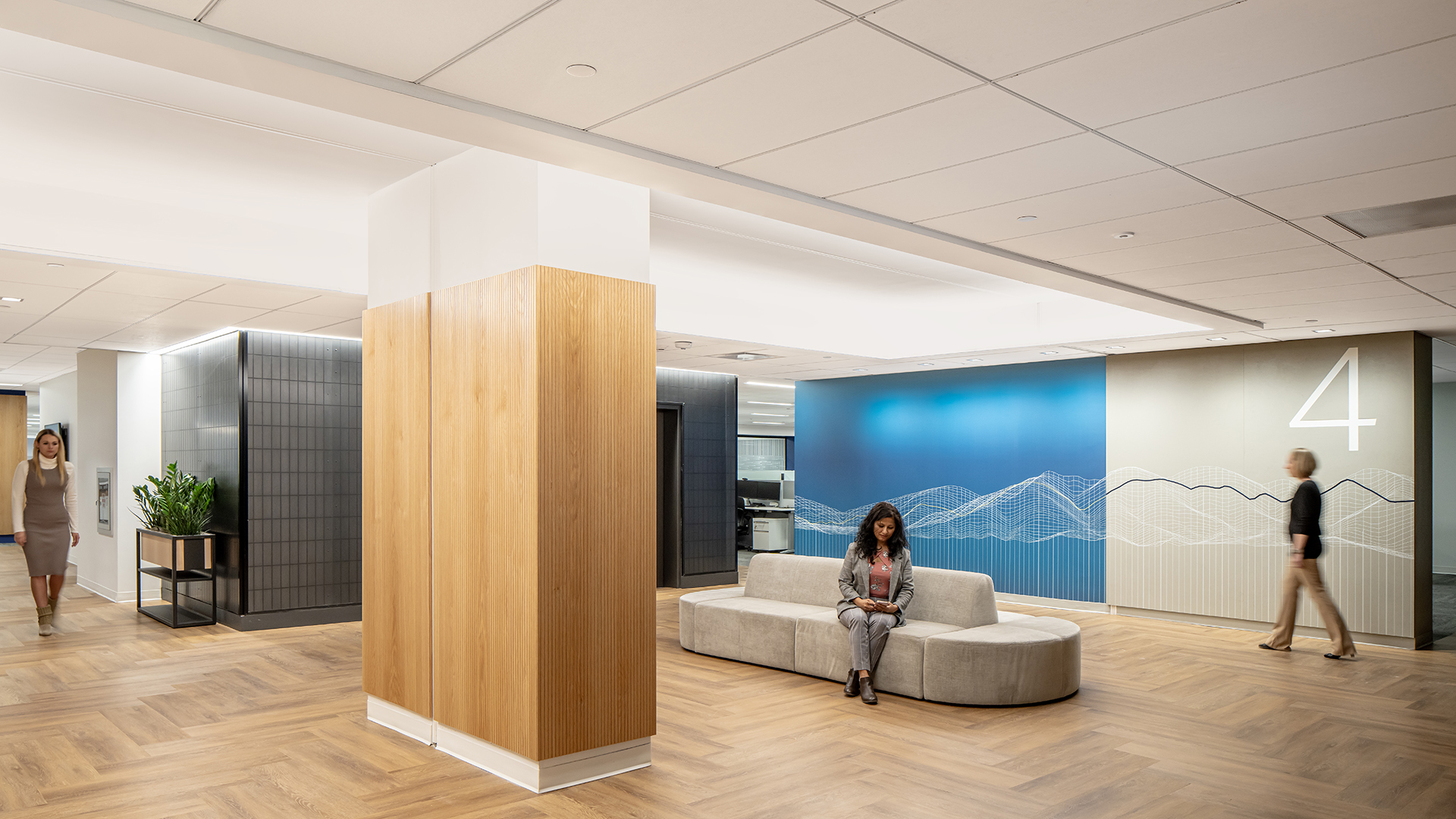
Architecture does a lot of heavy lifting. It shapes how we move, where we gather, and how a space feels. But even the best-designed building can fall short if people don’t know where to go, what to do, or how to use it.
That’s where functional graphics come in. These graphics guide people clearly and efficiently through a space.
Experiential graphic design builds on that foundation by integrating functional graphics into a larger narrative or environment, creating memorable experiences, telling stories, and reinforcing identity while solving practical, human problems that architecture alone cannot address.
WHEN GOOD SPACE STILL FEELS CONFUSING
Design teams often picture users who are calm, attentive, and casually meandering through a space on a beautiful, happy day, already familiar with their surroundings and the built environment we are creating for them.
In reality, most people are:
- Visiting for the first time
- In a hurry
- Managing distractions
- Already a little overwhelmed
A space can be beautiful and still be confusing. When that happens, people hesitate. They backtrack, question themselves and how they got here, lose confidence, and slow down. They ask for help. The environment starts working against them instead of for them.
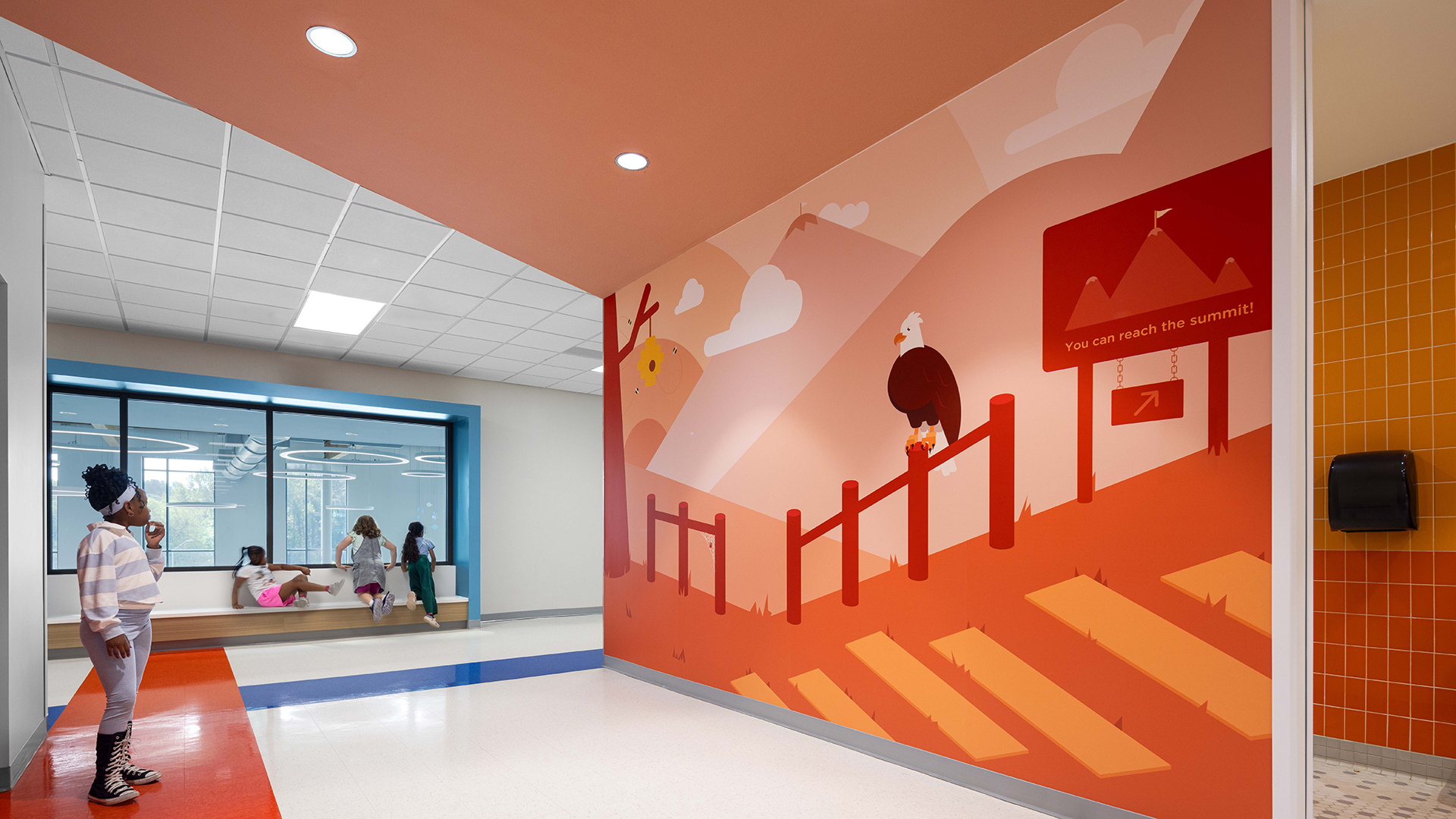
A SIMPLE USER JOURNEY
Imagine you’re a first-time visitor arriving at a corporate headquarters.
Without Functional Graphics:
- Parking is obvious, but the front door isn’t.
- The lobby looks great, but it’s not clear where to go. You wonder: Am I in the right place? Is this the same client I’ve been emailing with? Did I get off at the wrong floor?
- You find the elevators with the help of the person at the front desk, but where do you go next?
- You pause, second-guess, and, eventually, ask a handful of friendly faces for help.
With Functional Graphics:
- Arrival signage confirms you’re in the right place.
- Entry cues guide you naturally to your destination. Lobby branding reassures you that this is the same company you’ve been communicating with and signals that the space is designed to create a welcoming first impression.
- Wayfinding anticipates decisions before confusion kicks in.
- You’re able to move through the space with confidence.
Same building. Very different experience.
MORE THAN “MAKING IT LOOK GOOD”
Experiential graphic designers are sometimes brought in late to “add branding” or “activate walls.” But the most effective graphic work has very little to do with decoration.
Functional graphics help:
- Reduce cognitive load
- Improve flow and circulation
- Cut down on staff interruptions
- Support accessibility, safety, and compliance
When working well, you don’t even notice functional graphics. Things just feel easier. That’s not a lack of impact. It’s the point.
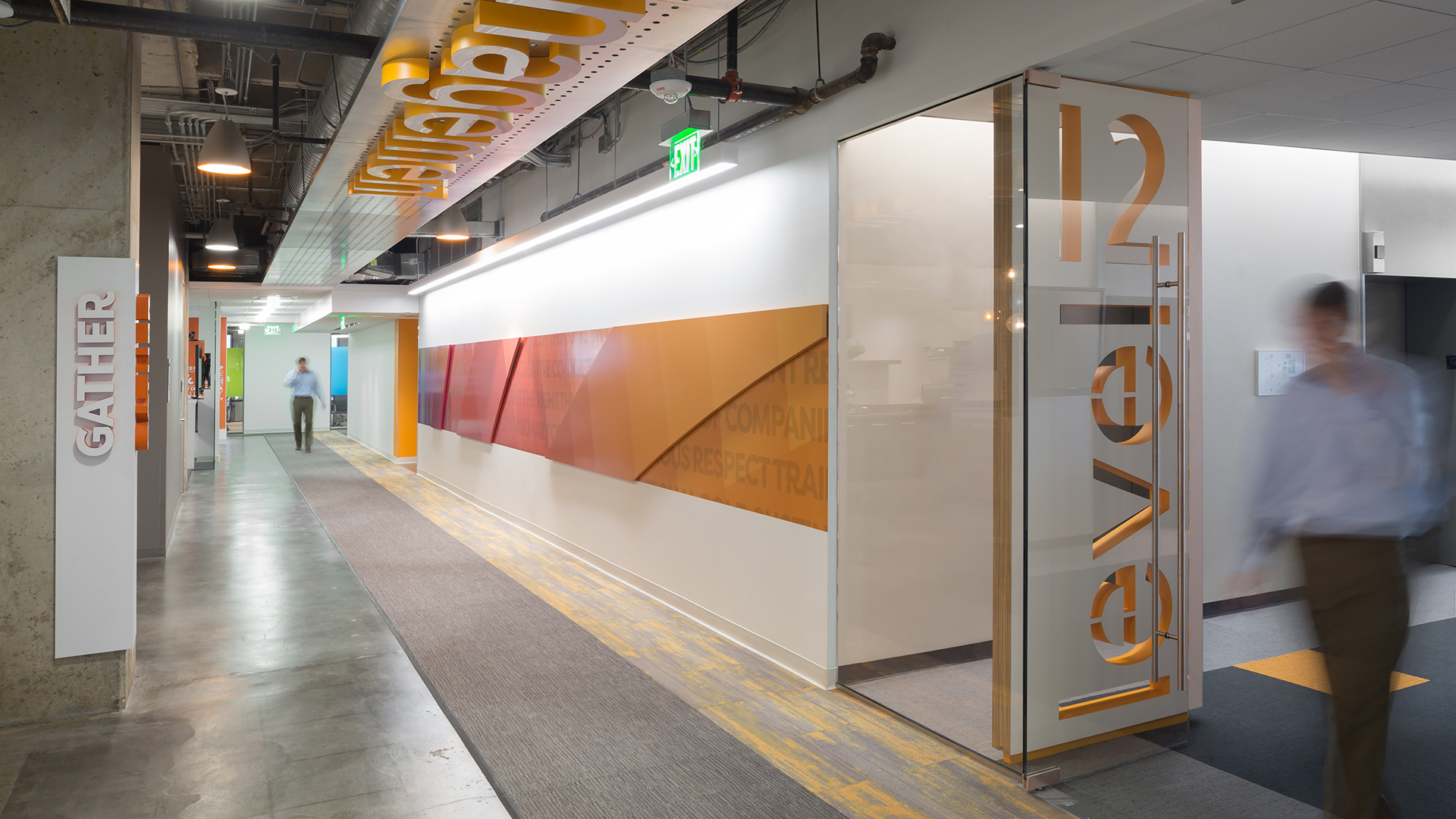
Take Reynolds American, for example. At its corporate headquarters, functional graphics are embedded directly into the user experience, not layered on as decoration. Colorful brand drivers are inset into corners throughout the office, reinforcing brand values while also acting as intuitive orientation cues. Large-scale wayfinding supergraphics greet users as they step off the elevators, immediately signaling where they are and where to go next. By using distinct color palettes on otherwise identical floors, the graphics eliminate déjà vu, reduce hesitation, and minimize the need to ask for directions, improving flow while quietly cutting down on staff interruptions.
CLARITY IS THE GOAL
Clarity doesn’t happen by accident. It’s designed.
Within an architecture firm, experiential graphics help translate big ideas into everyday moments, making sure people understand a space the way it was intended to be used.
Within an organization, experiential graphics reinforce your brand values. Is your organization known for being approachable, transparent, and easy to work with? Do you aim to provide your employees with a low-stress environment that supports their work and reflects the legacy they’re now part of? A brand isn’t just a logo over the front desk; it’s the behavior you live, the way you make visitors feel, and ultimately, what inspires people to continue working with you.
But the need for clarity doesn’t stop at the workplace. Functional graphics play a critical role across all building types, from retail and healthcare to higher education, civic, and community spaces. Anywhere people need to make decisions, navigate unfamiliar environments, or feel reassured that they’re in the right place, functional graphics become an essential layer of the experience.
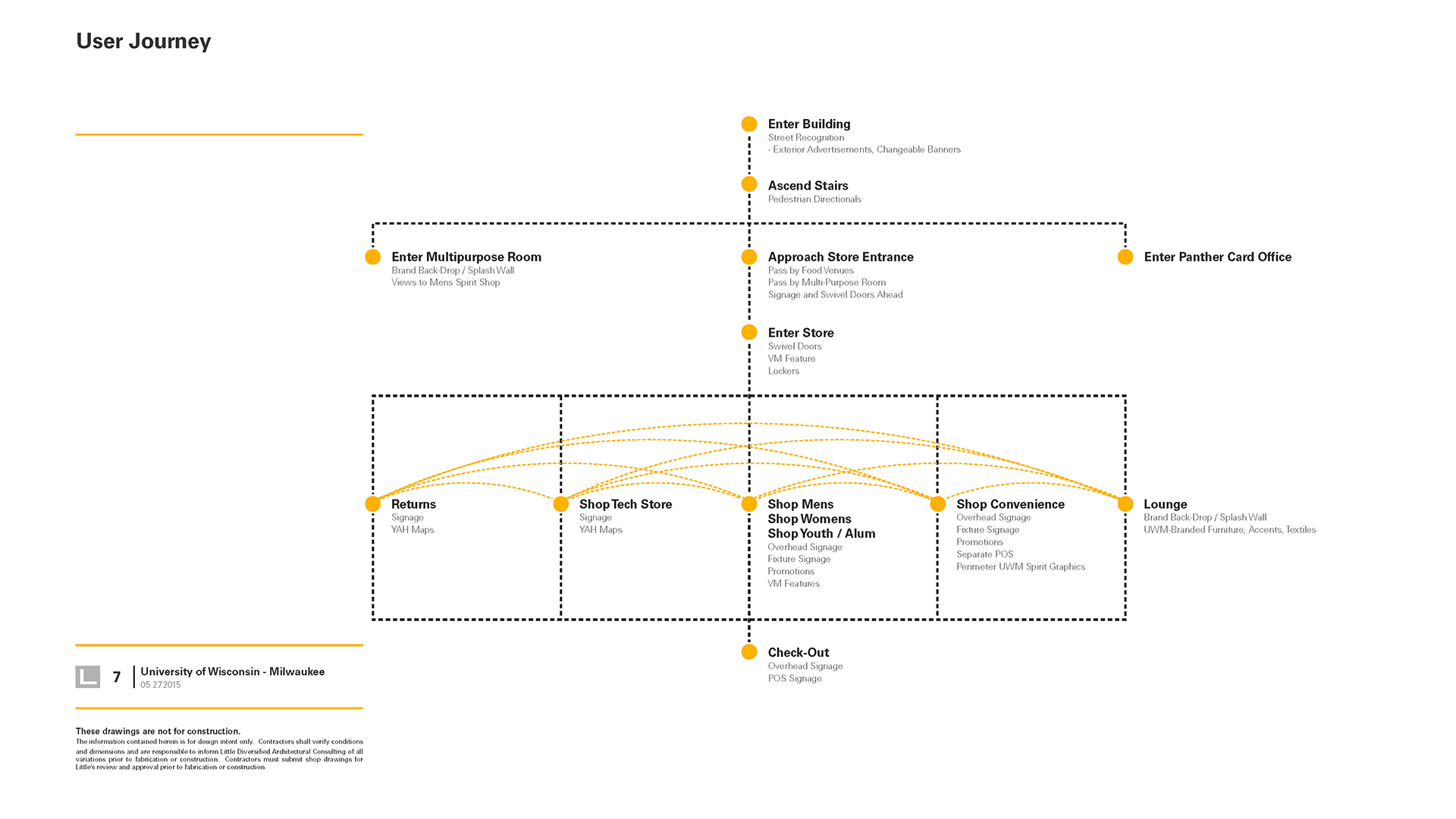
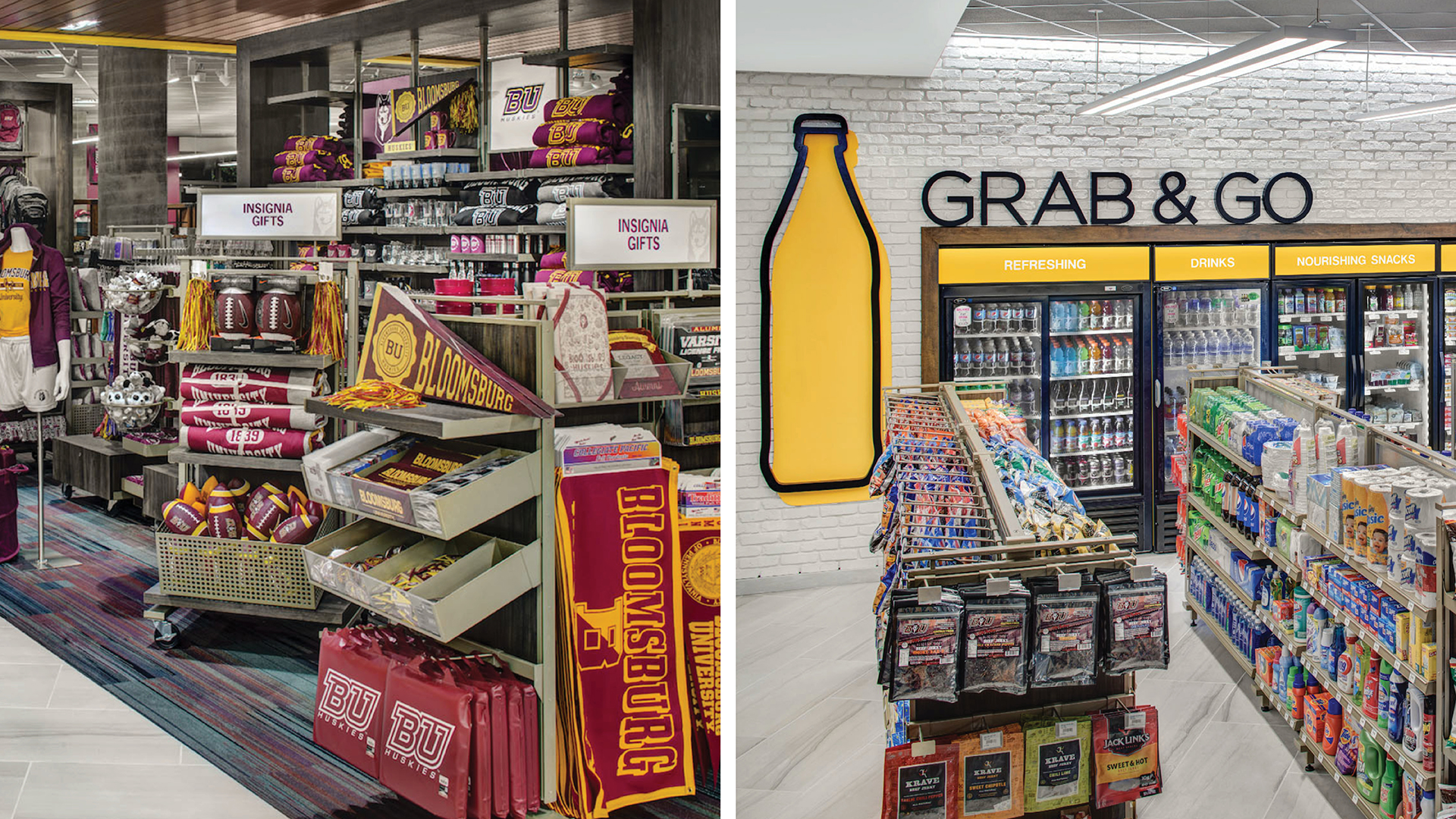
At Bloomsburg University’s campus store, functional graphics bring clarity to a retail environment that can easily become visually overwhelming. Campus stores often struggle with competing messages, dense merchandise, and inconsistent signage, all of which can make wayfinding and decision-making harder than it needs to be. Through tone-on-tone supergraphics, fixture-based signage, and intentional user-mapping, Bloomsburg’s brand is expressed with restraint and purpose—guiding students and visitors without adding visual noise. The value of experiential graphics lies in precision, communication exactly what matters, exactly when it matters.
DESIGN THAT DELIVERS
The true measure of purposeful design is how well it works for the people who use it every day, not how it looks in photos. Think of functional graphics like the breadcrumbs Hansel & Gretel dropped in the woods (though, not edible and with a happier ending). Small cues and reinforcements guide visitors along the path, giving them a steady hand to hold and the right information at key decision points.
Functional graphics help architecture deliver on its promise by turning complex spaces into intuitive, human-centered experiences.