
Earlier this year, Little brought together financial institution representatives and under-35 consumers for a candid panel discussion to explore how younger generations are reshaping how they handle their money and where they work. The intent wasn’t to solve the challenges facing financial institutions, but to surface prevalent roadblocks, challenge assumptions, and create space for honest conversation about how expectations are changing. The discussion leaned heavily into retail banking and was based in industry research along with a yearlong internal research project—exploring what today’s customers value most, where the experience may be falling short and where opportunities remain to elevate the banking experience. What emerged wasn’t a list of solutions, but a clearer picture of the questions financial institutions should be asking as they consider what comes next.
While the perspectives came from different sides of the industry, four themes carried the conversation:
- relationships over transactions,
- authentic trust,
- seamless omnichannel experiences, and
- proactive service
Here’s what we heard and what it means for the future of branch design.
YOUNGER CUSTOMERS DON’T WANT A SALES PITCH. THEY WANT A GUIDE.
Multiple under-35 panelists consistently described walking into a branch bank already informed. They’ve done the research. What they’re looking for isn’t someone to sell them a product. They need someone to help validate a decision that they’ve already made.
“I want to feel empowered—that sense of agency that I can make the best decision for me because you gave me the tools to do it,” said panelist Meg Mitchell, a member of Little’s retail service team.
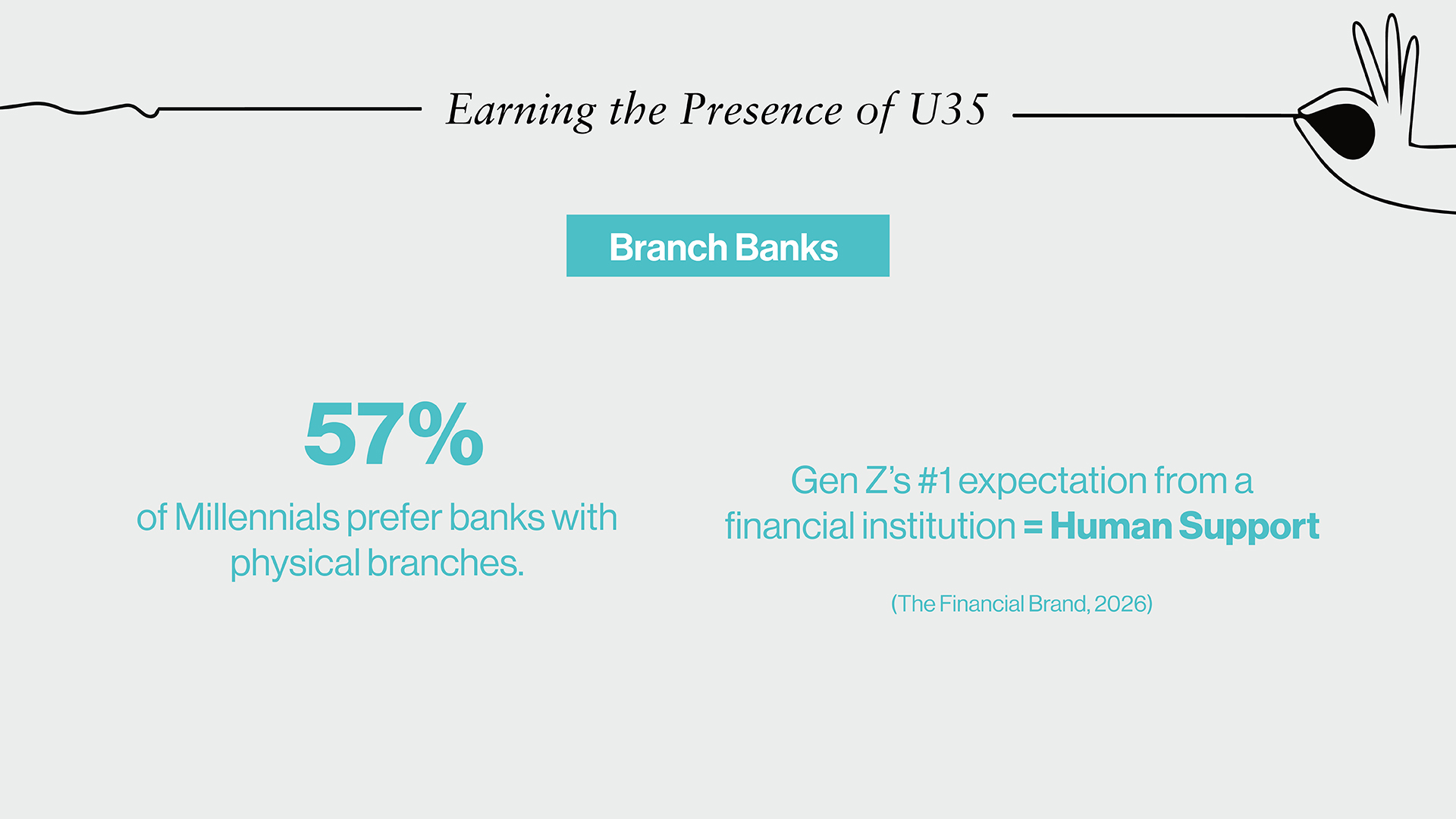
Meg isn’t alone. According to our internal research, 57% of Millennials still say they prefer banks with physical branches, and Gen Z’s number one expectation from a financial institution isn’t digital convenience, it’s human support.
“A sales pitch immediately throws up a wall for me. What brings that wall down is how you relate to me—genuine interest in getting to know me and who I am. Just like any relationship, I appreciate slowly easing in and building loyalty over time, “ said Colin Higgins, Senior Project Manager at JLL.
That shift matters more than ever with the Great Wealth Transfer underway. As assets move to a new generation, many customers are managing money and making financial decisions for the first time. That’s an opening for the branch to become less of a transaction counter and more of a trusted resource for guidance and education.
Key Takeaway
The data backs this up. Financial leaders on the panel shared that accounts opened in a branch carry meaningfully higher balances after twelve months than digital-only accounts, which also see far higher attrition. The relationship, not the transaction, is still what earns loyalty. Design for that.
FEELING WELCOME IS MORE ABOUT THE PEOPLE THAN THE SPACE
There’s a growing push to make branch banks and workspaces feel more like hospitality environments. But panelists were clear: feeling welcome at a bank isn’t really about the space. It’s about the people in it. The most meaningful experiences they described weren’t tied to design. They were tied to employees who were approachable, engaged, and genuinely interested in helping. Ultimately, we need to design spaces that allow those employees to thrive.
Financial leaders pointed to something small as one of the most reliable signals of trust: hearing a customer’s name during an interaction. It sounds minor, but panelists agreed it’s one of the clearest signs that the relationship (not the transaction) is what’s actually being valued.
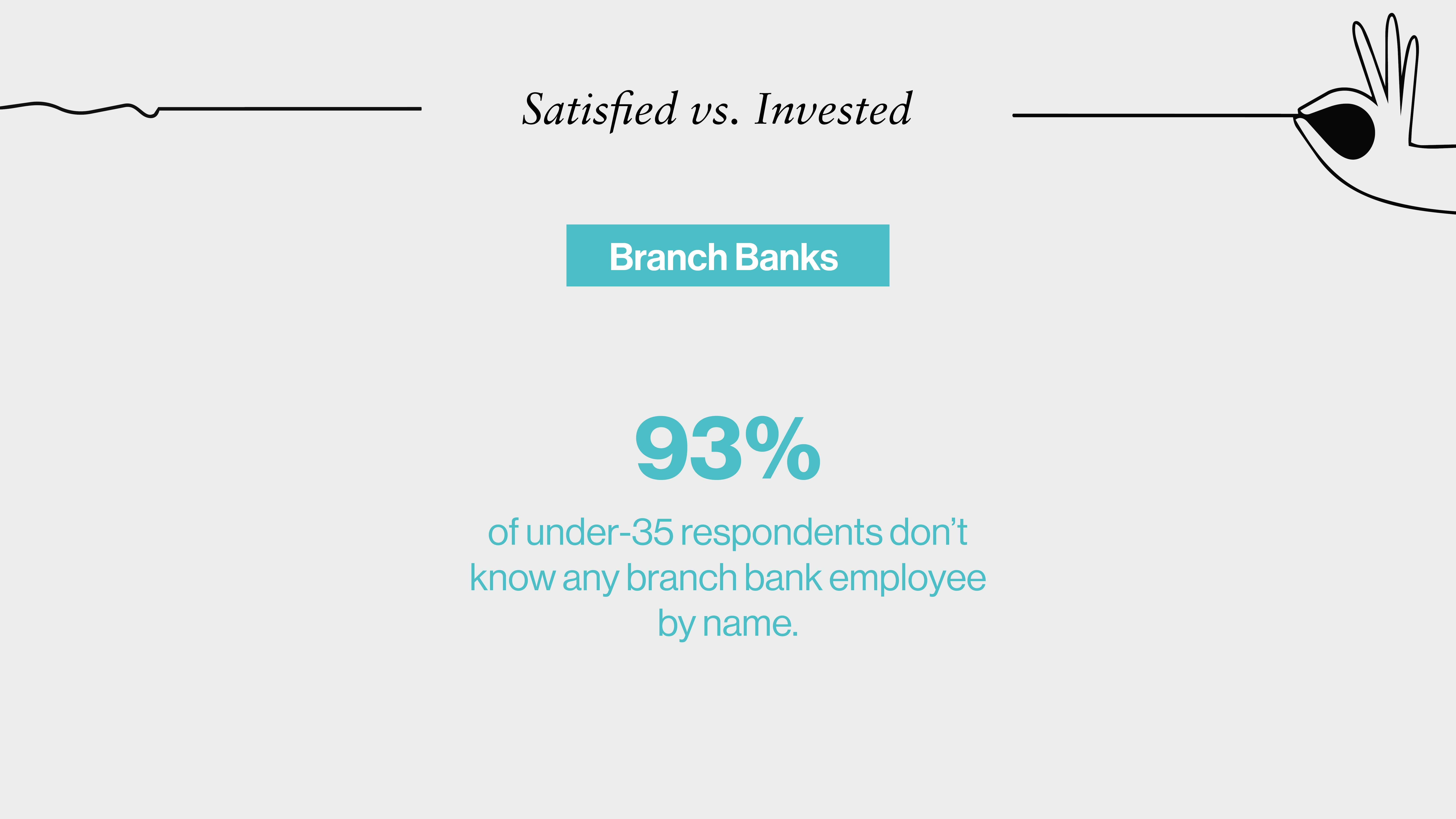
The data shows just how rare that signal is right now. 93% of under-35 respondents say they don’t know a single branch bank employee by name. That’s not a small gap. It’s most of an entire generation walking into their bank as a stranger every time.
Security used to be the branch’s job to signal: the vault, the teller line, the sense of institutional weight. That’s changing. Financial leaders on the panel agreed that today’s branch needs to communicate access, not security, and that visibility is the design cue doing the most work.
Ben Hopper, Senior Vice President at First Horizon, shared that new branches are intentionally placing conference rooms front and center as a visible signal that the branch exists to support conversations and financial goals, not simply transactions.
Key Takeaway
This is a small design move with an outsized message. Whether it’s a name remembered or a conference room made visible, customers read every signal as evidence of whether they can trust you. If the most visible thing in your branch is still a teller line, you’re telling customers the branch is for transactions. If it’s a space for a conversation (and a person who knows their name), you’re telling them it’s for something more.
REFRESH THE SPACE. REIMAGINE THE EXPERIENCE.
New finishes send a message that an institution is investing in its community and its people. But the under-35 panelists were clear-eyed that a refreshed branch and a reimagined customer experience are not the same thing, and customers can tell the difference.
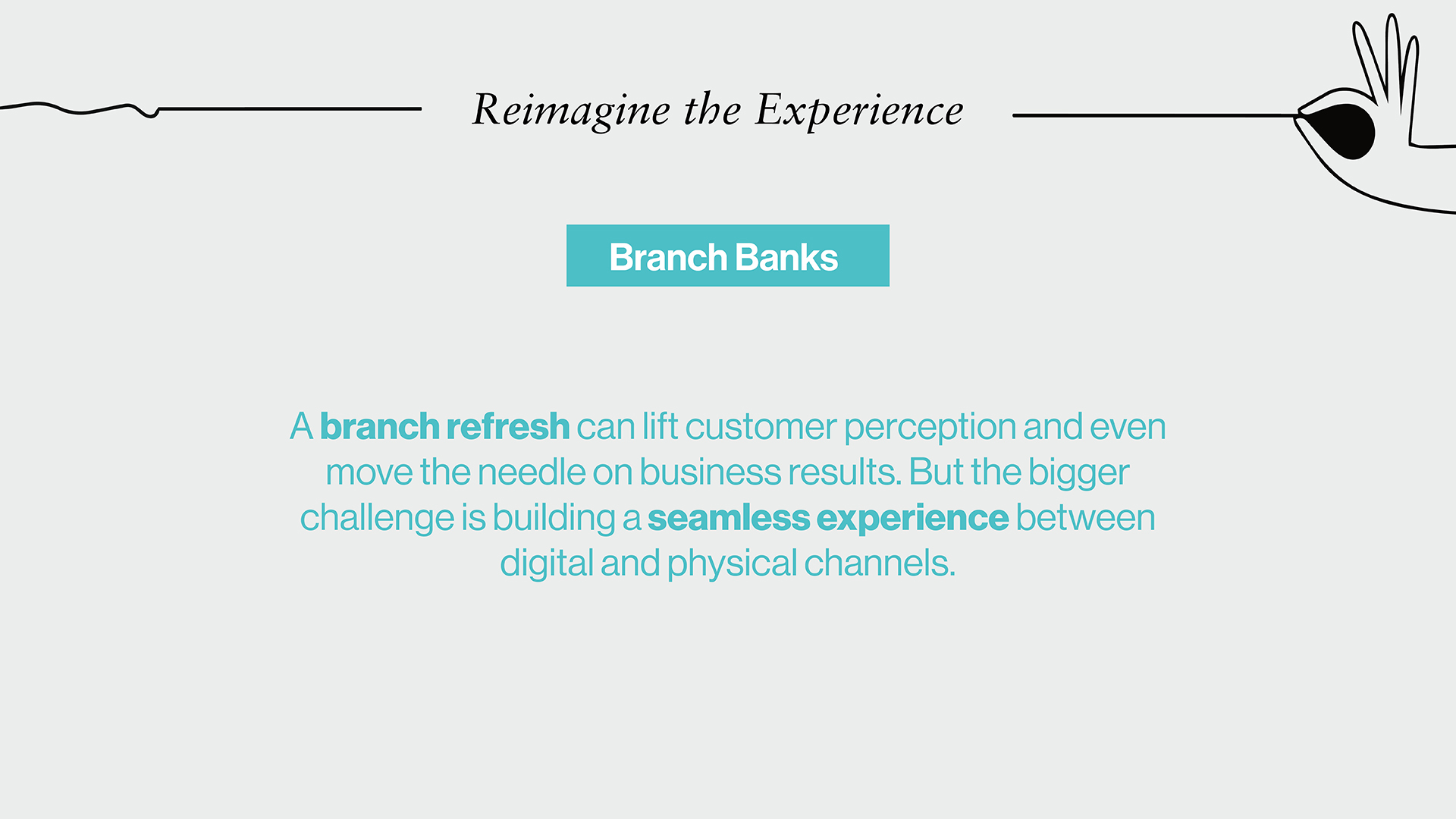
Financial leaders agreed. A branch refresh can lift customer perception and even move the needle on business results. But both First Horizon and Truist pointed to a bigger challenge: building a seamless experience between digital and physical channels. As Andrew Marco, Senior Workplace Designer at Truist, noted, “There’s an opportunity within the retail space to break out of a one-size-fits-all model and start thinking about how we can deliver our service in different ways, and leverage all the channels to do that.”
Key Takeaway
A refresh is what customers see when they walk in. Reimagining is what happens when every channel—branch, app, call center—is designed to work as one experience instead of separate ones. One is a finishes package. The other is a strategy.
PROACTIVE SERVICE IS THE NEXT COMPETITIVE ADVANTAGE
If there was one idea that energized the room, it was this: proactivity is the most underdeveloped lever in retail banking. The under-35 panelists described loyalty as something that is earned continuously. They want financial institutions that understand their goals, meet them where they are, and create consistency between digital and in-person experiences. They want to feel confident that employees are invested in helping them.
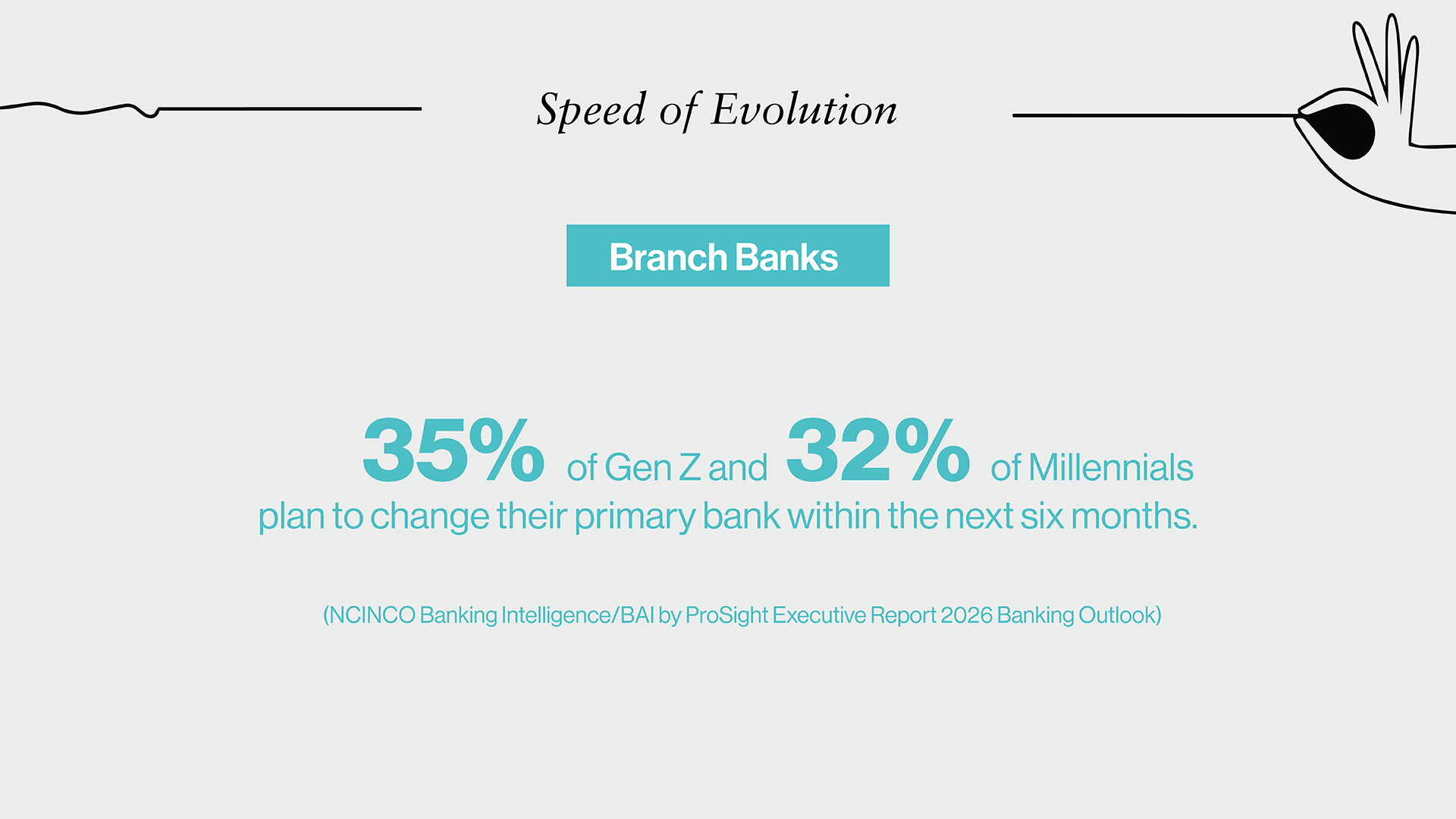
The stakes here are higher than most institutions realize. Over 90% of Gen Z and Millennials say they’re satisfied with their bank but are quick to switch anyway. Take a minute and let that sink in. You could design a space that does everything right … and customers switch anyways. Right now, 35% of Gen Z and 32% of Millennials say they plan to change their primary bank within the next six months. Satisfaction, on its own, isn’t buying anyone loyalty.
Charlotte Dudley, Brokerage Coordinator at JLL, said, “I want a one-stop shop. I want somewhere that can do it all for me while not talking to a robot. I want my experience to be cohesive with what I see on my app and what I see in person when I walk into the branch.”
Financial leaders surmised that proactivity is the single most underdeveloped tool banks have. They made the case that flipping from reactive to proactive (such as offering a rate adjustment before someone calls to cancel, checking in on an account before a customer notices something is off) would change the loyalty equation more than any new product.
Key Takeaway
Consistency across channels isn’t a nice-to-have anymore. Customers don’t experience “digital” and “physical” as separate relationships with your brand. They experience one relationship, and they notice every time it breaks continuity. As one under-35 survey respondent put it: “I will go out of my way to a different branch if service isn’t right.” Satisfied isn’t the same as loyal. Right now, most banks are only earning the former.
THE BOTTOM LINE FOR RETAIL BANKING DESIGN
Customers under 35 aren’t choosing between digital and physical banking. They expect both to work together, without friction. And they’ll notice a name forgotten as quickly as they’ll notice an app that doesn’t match the branch.
The opportunity in front of retail banking leaders isn’t to redesign the branch in isolation. It’s to design every interaction—a conference room made visible, a rate adjustment offered before someone asks, a channel that feels the same whether a customer’s on the app or standing at the branch—so it feels connected, intentional, and personal.
It’s worth noting this shift isn’t only happening on the customer side of the counter. The same generation walking away from banks that feel transactional is also showing up differently at work. 56% of financial employees say they come into the office for the experience, not out of obligation, and 94% of financial workplace leaders now call employee experience a strategic priority. The gap between intention and experience isn’t unique to the branch floor. It’s showing up on both sides of it.
That’s a design challenge as much as it is a strategy challenge. And it’s the one we love to solve.